
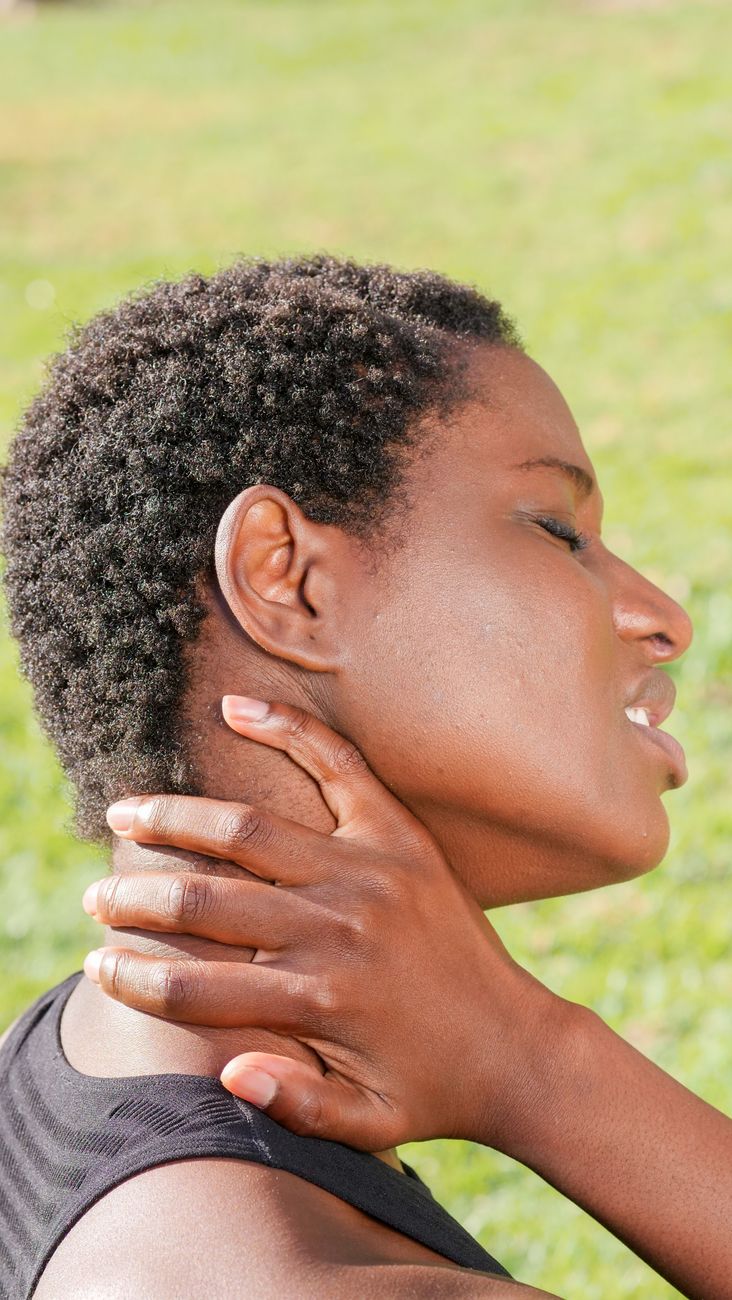
When your body complains, which side does it pick?
If you answered without thinking, you probably know the pattern. It’s the right shoulder that creeps toward your ear, the left hip that stiffens on long drives, or the one side of your neck that’s been “a little off” since spring.
That’s a habit with a paper trail.
Nobody is perfectly symmetrical, and nobody moves symmetrically either. Think about your daily routine:
- You carry your bag, laptop, or child on the same shoulder or hip.
- You use your dominant hand for your mouse, phone, and just about everything else.
- You cross the same leg, lean on the same armrest, and sleep on the same side.
- You angle your chair or turn your head in the same direction throughout the workday.
Individually, these habits seem insignificant. But repeated thousands of times, they influence how your body distributes movement and workload.
Over time, certain muscles may become overworked or restricted, while others contribute less than they should. Your body gets comfortable with the familiar, even when that familiar pattern isn’t serving you well.
Why it doesn’t just fix itself
Your body is great at compensating. When one side is tight, other parts of you quietly pick up the slack, so the problem spreads. A tight right shoulder can pull your neck out of line. A locked hip can change how you walk and load your lower back. By the time you feel it, you’re often dealing with the compensation, not the original source.
That’s also why stretching the sore spot alone sometimes disappoints. You’re stretching the symptom, not the pattern behind it.
Three things you can start today
- Switch your carry. Alternate shoulders with your bag, or go cross-body, or reduce what’s in it.
- Mix up your routine. Use your non-dominant hand for small tasks like brushing your teeth, scrolling, or opening doors. It feels silly and it works.
- Reset your desk. Center your monitor and keyboard so you’re not rotating to one side all day.
These help prevent the pattern from getting deeper. They don’t release what’s already built up.
A little awareness goes a long way
Your body has spent years learning its favorite shortcuts. Changing those patterns takes more than an occasional stretch.
Pay attention to where you feel tight, how you move, and which side tends to do all the work. Sometimes the path to feeling better isn’t doing more; it’s learning to move differently.
Let’s work on your tight side
If the same side has been bugging you for months, it’s time to stop managing it and start addressing it. In a session, I look at how your body is actually holding itself, work on the tight side and the areas compensating for it, and give you specific movements to do between visits so the work lasts.
Book your online coaching or massage session this week.
The longer a pattern runs, the more it settles in. If you’d like to use your HSA or FSA funds I’m happy to answer questions. Get in touch through my contact page.
Thanks for stopping by!
-Corina